
Dubai runs on many languages, but Arabic Translation in Dubai still matters most when paperwork has to be accepted by an authority. Visas, courts, Emirates ID-related files, licensing, and even some banking requests can all require Arabic, not just English.
That’s where small wording slips hurt. One wrong name spelling, date format, or missing stamp can slow your application, so relying on professional translation services in Dubai ensures every detail is accurate. Below is a clear overview of how the process works., what “certified” means, and the common mistakes that cost people time.
Where Arabic translation is used most in Dubai (and why Arabic often wins)
Arabic is the UAE’s official language for many government and legal processes, so the Arabic version is often the one that carries weight if there’s a dispute. That’s why legal Arabic translation in Dubai is treated differently from a casual translation for reading.
Common requests include:
- Personal status papers (family and identity)
- Legal filings and notarized documents
- Business contracts and compliance records
- School and university submissions
Example: a visa application might accept English supporting papers, but the key certificates (marriage, birth, or police clearance) may need Arabic for official submission.
- Passports and Emirates ID copies
- Birth and marriage certificates
- Powers of attorney
- Contracts and court documents
- Invoices and company letters
- Medical reports
- Diplomas, transcripts, and academic document translation files
How English and Arabic document translation works, step by step
A good process feels like a clean airport checklist; nothing gets left behind.
- Share the document and purpose: Send a clear scan and say where it will be submitted (court, immigration, university).
- Get a fixed quote and timeline: Confirm the deadline and whether you need a hard copy.
- Translator assignment: Ask for a translator who matches the document type (legal, medical, academic).
- Translation in formal Arabic: Provide exact spellings of names in English and Arabic if you have them.
- Editing and proofreading: Request a second review for numbers, dates, and proper nouns.
- Formatting and stamp handling: Make sure seals, signatures, and letterheads stay visible and are described correctly.
- Delivery and final check: Before you submit, compare page count and attachments
Why Modern Standard Arabic matters for official paperwork
Modern Standard Arabic is the formal Arabic used in official writing across the Arab world. It’s the safe choice for government, legal, academic, and business documents.
Using casual or local wording can create confusion or trigger rejection if the text sounds informal. For official submissions, modern standard Arabic keeps meaning clear and consistent.
Certified and legal translations in Dubai: What gets stamped, attested, and accepted
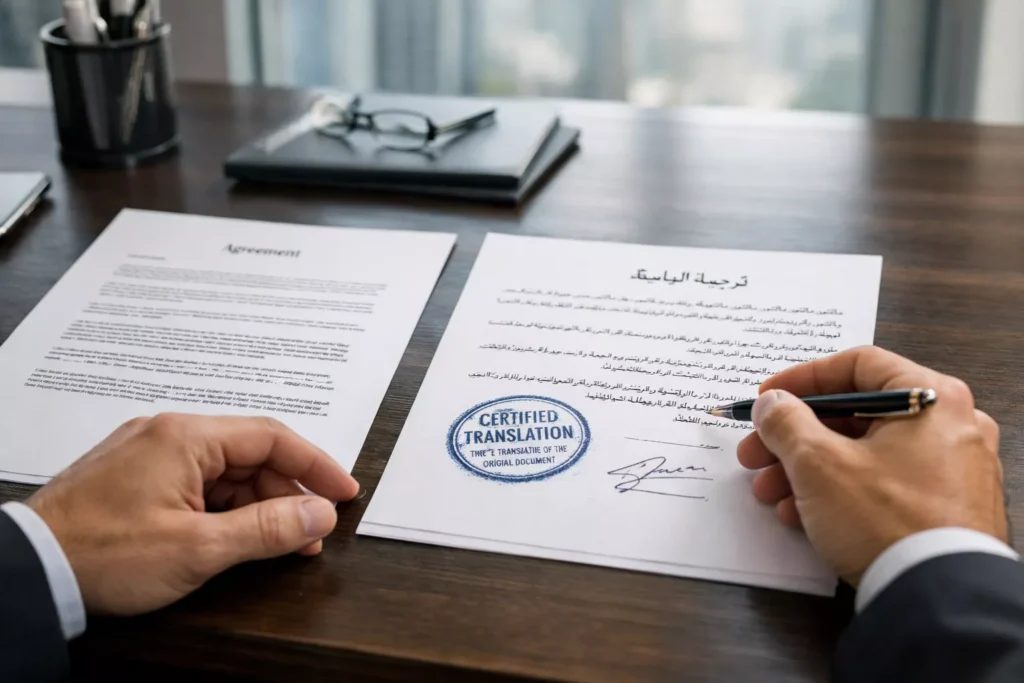
A certified translation is a translation delivered with a signed and stamped statement confirming it matches the original. Authorities ask for this because they need accountability, not just readable text.
Some cases also need attestation, depending on where the document was issued and where it will be used. The UAE’s official guidance on MoFAIC document attestation explains when extra authentication may be required.
If you need certified output for official submission, review certified translation services in Dubai. Also, ask how files are stored and who can access them, as privacy matters with passports and court papers.
If you need certified output for official submission, review certified translation services in Dubai. Also, ask how files are stored and who can access them, as privacy matters with passports and court papers.
A quick checklist to get accuracy the first time
- Keep consistent name spelling across all documents
- Match numbers and dates exactly (including formats)
- Ensure seals and stamps are clear on the scan
- State the purpose of translation upfront
- Confirm the submission authority’s requirements
- Ask about the review process for accuracy in Arabic translation
- Confirm turnaround time before paying
Conclusion
Dubai moves fast, but official paperwork doesn’t forgive mistakes. Use Modern Standard Arabic for formal documents, ensuring a clear and accurate translation, along with careful editing and proofreading to guarantee correctness. It is important to confirm whether certified and possibly attested copies are required. When submitting educational documents, an accurate academic transcript translation can help ensure that the academic content is properly understood by official authorities.
Before choosing a provider, look for experienced legal translators, a real QA process, clear pricing, and confidentiality controls. If you’re unsure about requirements, request a quote and confirm the submission rules first; it saves days later.
Why Choose Rightway Translation in Dubai
With Rightway Translation, your documents are accurate, official, and ready for submission, giving you confidence and peace of mind.
- Expert Translators: Specialists in legal, academic, and business documents.
- Certified & Attested: Translations accepted by UAE authorities.
- Accurate & Proofread: Thorough review ensures error-free documents.
- Confidential & Secure: Strict privacy for sensitive files.
- Reliable & Timely: Clear quotes and fast delivery to meet deadlines.
Frequently Asked Questions
How can I get a document certified in Dubai?
You can certify a document in Dubai through the relevant government authority or an approved notary public.
Which documents require official attestation?
Legal, educational, and personal documents such as degrees, transcripts, and contracts usually need attestation.
How long does certificate attestation take in the UAE?
Attestation in the UAE typically takes a few days to a couple of weeks, depending on the document type and process.