
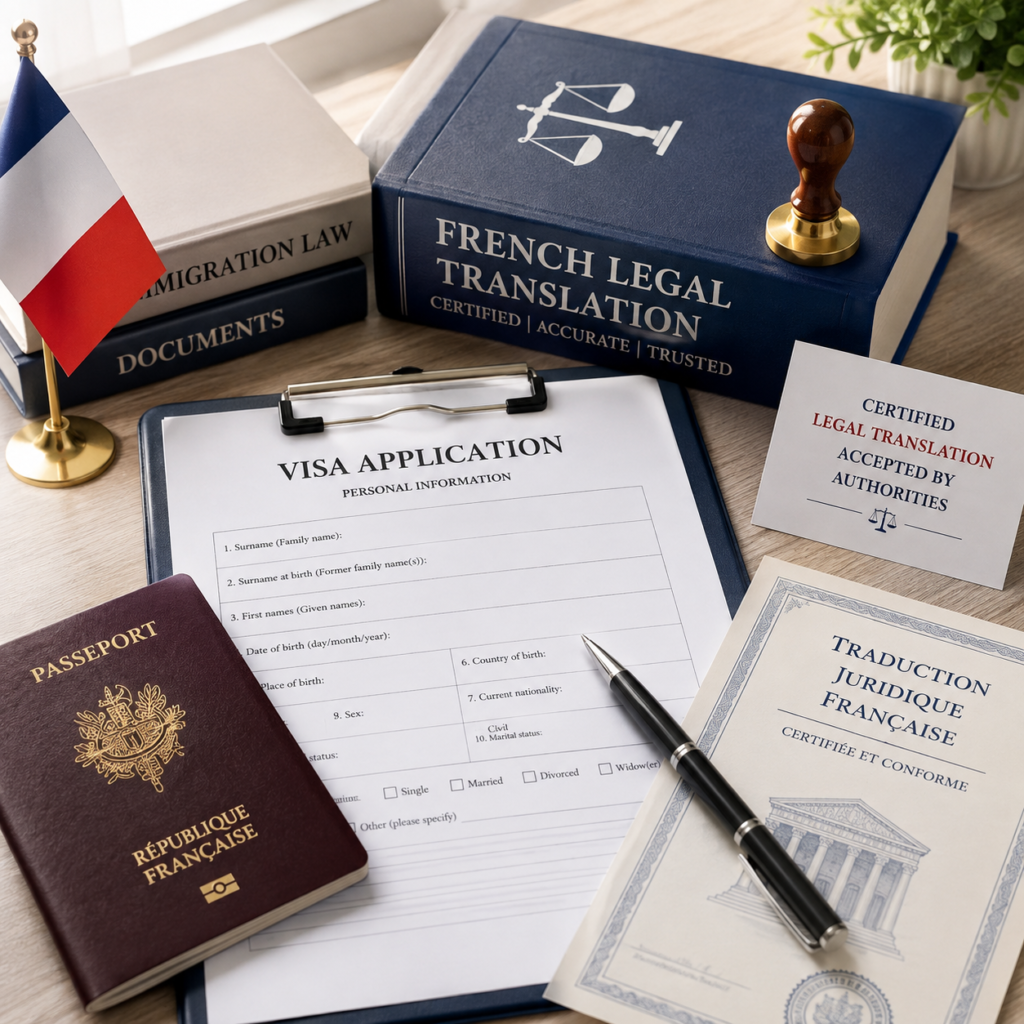
I’ve handled hundreds of visa files where a single mistranslated word held up an application for weeks. Names spelled differently across documents, dates formatted the French way instead of the UAE way, stamps left untranslated. Immigration offices reject these files, not because the translation was wrong exactly, but because it wasn’t precise enough for legal use.
That’s the difference between a general translation and a proper French legal translation. If you’re preparing French documents for a UAE visa or immigration application, here’s what actually needs translating, what gets rejected, and how to avoid the delays I see most often.
What Counts as a Legal Document for Visa Purposes
Not every French document needs certified legal translation, but most immigration paperwork does. Authorities typically require it for anything used to prove identity, civil status, or legal history.
Documents that almost always need it include:
- Birth certificates
- Marriage or divorce certificates
- Passports
- Police clearance certificates
- Educational degrees, for certain visa categories
- Power of attorney documents
If a document proves who you are, your family status, or your legal record, treat it as one that needs official translation before submission.
Common Documents We See in Visa Applications
Passport translation. Some visa categories require a translated copy of the passport’s information page, especially when supporting documents are cross-checked against it. Passport translation needs to match the exact spelling and formatting used on the original, since even minor discrepancies can trigger a review delay.
Birth certificate translation. This is one of the most requested documents for family visas and residency applications. Birth certificate translation needs to carry over every detail exactly, including parents’ names, registration numbers, and issuing authority, since these get cross-referenced against other submitted paperwork.
Marriage and divorce certificates. Required for spouse visas and family sponsorship. These documents often include legal terminology specific to French civil law, which needs accurate legal equivalents in Arabic or English rather than a literal word-for-word translation.
Why Certification Matters More Than Accuracy Alone
A translation can be accurate and still get rejected if it isn’t certified correctly. UAE authorities generally require translations to come from a legally recognized translator or agency, stamped and, in many cases, further attested by the Ministry of Foreign Affairs or a notary.
This is where a lot of self-translated or informally translated documents fall apart. The wording might be correct, but without proper certification, the document has no legal standing for an official application.
If you want a deeper breakdown of certification steps and formatting requirements, our French legal translation guide covers the process in more detail.
Mistakes That Delay Visa Applications
After years of reviewing these files, the same issues come up again and again:
- Names transliterated inconsistently across different documents
- Dates translated in French format instead of being adjusted for UAE requirements
- Official stamps, seals, or watermarks left untranslated or unnoted
- Missing certification or attestation stamps
- Using a general translator instead of one qualified in legal terminology
Most of these are avoidable with a translator who specifically handles legal and immigration documents, rather than general translation work.
Where Legal Translations Are Actually Used
Once translated and certified, these documents typically go into a visa or residency file submitted to UAE government departments. Requirements can vary slightly depending on the emirate and the type of application, so it helps to understand government application requirements before submitting, particularly around attestation and which authorities accept which certifications.
Choosing a Translator for Visa Documents
Look for a translator or agency with direct experience in legal and immigration translation, not just general French-to-Arabic or French-to-English work. A qualified provider will know the formatting UAE authorities expect and won’t need corrections after the fact.
For applicants based in Dubai, working with an established translation agency in Dubai makes it easier to handle attestation and government submission steps in the same process. For those in Sharjah, our legal translation services in Sharjah team handles the same certified process locally, without needing to travel between emirates for different steps.
The Bottom Line
French legal translation for visa and immigration documents isn’t just about converting language. It’s about precision, correct certification, and formatting that UAE authorities will accept without pushing your application back for corrections.
If you’re preparing French documents for a visa or residency application, Right Way Translation can handle the translation, certification, and attestation steps so your file goes in correctly the first time. Get in touch to start your document review.
Frequently Asked Questions
Does every French document need certified translation for a UAE visa?
Most identity and civil status documents do, including birth certificates, marriage certificates, and passports. Some supporting documents may not, depending on the visa category.
How long does certified legal translation take?
Standard documents like birth or marriage certificates usually take 1 to 2 business days. Complex documents or those needing additional attestation can take longer.
Can I translate my own documents for a visa application?
No. UAE authorities require translations from a certified, legally recognized translator or agency. Self-translated documents are not accepted for official applications.
What’s the difference between translation and attestation?
Translation converts the document’s content accurately into the required language. Attestation is a separate legal step confirming the translation is valid, usually done through a notary or government authority.
Do translated documents need to match the original format exactly?
Yes, formatting, names, dates, and official markings need to match the original closely, since discrepancies are one of the most common reasons applications get delayed.