
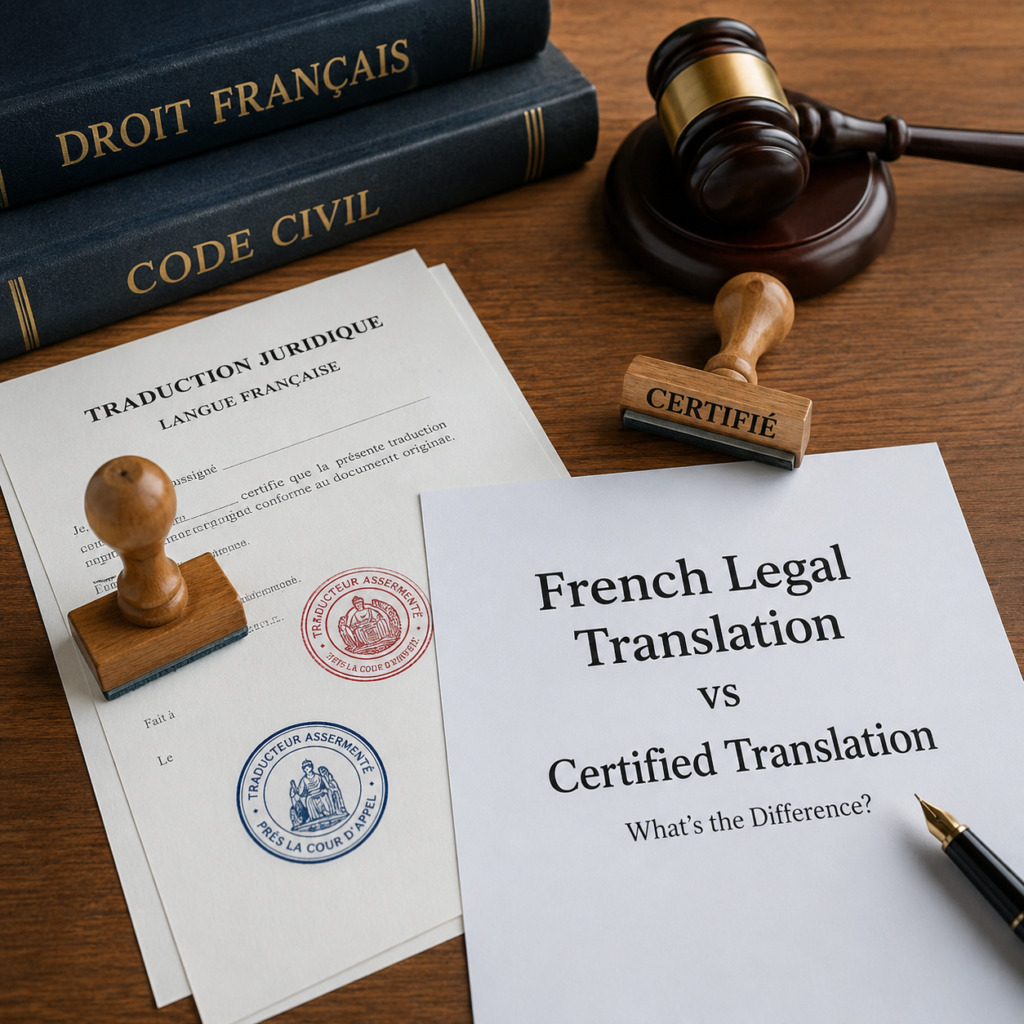
If you’re submitting French documents to government authorities, courts, universities, or businesses in the UAE, you’ve probably come across the terms French legal translation and French certified translation. While they may seem interchangeable, they serve different purposes depending on the type of document and the authority requesting it.
Choosing the wrong type of translation can delay visa applications, legal proceedings, business registrations, or official approvals. Understanding the difference helps ensure your documents meet the required standards the first time.
Whether you’re an individual, a business owner, or an expatriate in Dubai, working with an experienced Translation agency Dubai can help you determine which translation service your documents require.
What Is French Legal Translation?
French legal translation involves translating documents that have legal significance while preserving their exact meaning, terminology, and legal context. These translations are often required for documents that will be reviewed by courts, government departments, law firms, or official authorities.
Unlike general translation, legal translation requires a deep understanding of legal systems, terminology, and document formatting. Even a small mistake in wording can change the legal meaning of a document.
Common Documents That Require French Legal Translation
- Contracts and agreements
- Court judgments
- Power of attorney documents
- Memorandums of Association (MOA)
- Commercial licenses
- Immigration documents
- Affidavits
- Company incorporation documents
- Legal notices
- Employment contracts
Every legal document must be translated accurately so that the translated version carries the same meaning as the original.
What Is French Certified Translation?
French certified translation is a translation accompanied by a signed declaration from the translator or translation company confirming that the translation is complete and accurate.
Certification provides confidence that the translated document faithfully represents the original. Many educational institutions, employers, embassies, and government organizations request Certified Translation Services in Dubai before accepting foreign-language documents.
Certified translations are commonly used for official but non-litigation purposes where authenticity and accuracy are essential.
Common Documents That Need Certified Translation
- Birth certificates
- Marriage certificates
- Academic transcripts
- Diplomas
- Passports
- Driver’s licenses
- Medical certificates
- Police clearance certificates
- Immigration paperwork
- Financial documents
Depending on the receiving authority, certification requirements may differ, making it important to verify what level of translation is needed before submitting your documents.
French Legal Translation vs Certified Translation: Key Differences
| Feature | French Legal Translation | French Certified Translation |
|---|---|---|
| Purpose | Legally binding and official documents | Official verification of translation accuracy |
| Used For | Courts, legal authorities, government departments | Universities, employers, immigration, embassies |
| Focus | Legal terminology and legal accuracy | Translation accuracy and authenticity |
| Certification | May require legal authorization depending on jurisdiction | Includes a certification statement confirming accuracy |
| Common Documents | Contracts, court papers, legal agreements | Certificates, passports, transcripts, licenses |
Although the two services overlap in some situations, they are not always the same. Some legal documents may also require certification, while some certified translations may not involve legal documents at all.
Which Translation Do You Need?
The answer depends on the organization requesting your documents.
You may need French legal translation if:
- You’re submitting documents to a UAE court.
- You’re handling a business dispute.
- You’re registering a company.
- You’re signing legal agreements.
- You’re completing official legal procedures.
You may need French certified translation if:
- You’re applying to a university.
- You’re applying for a visa.
- You’re submitting personal documents.
- You’re applying for employment.
- You’re completing immigration procedures.
If you’re unsure, always check the requirements of the receiving authority before arranging the translation.
Why Accuracy Matters
Legal and certified translations leave very little room for error. Incorrect names, dates, legal terms, or formatting can result in rejected applications, delays, or additional expenses.
Professional translators understand the importance of:
- Consistent legal terminology
- Accurate formatting
- Confidential handling of sensitive documents
- Complete translation without omissions
- Compliance with official submission requirements
Choosing experienced professionals helps reduce the risk of costly mistakes and ensures your documents are accepted without unnecessary complications.
When Is Legal Translation Required in the UAE?
Understanding the purpose of your documents is the easiest way to determine whether you need legal or certified translation.
Legal translation is generally required when documents are submitted to:
- UAE courts
- Government ministries
- Public notaries
- Business registration authorities
- Arbitration centers
- Legal firms
Certified translation is commonly requested by:
- Universities and educational institutions
- Employers
- Immigration authorities
- Insurance providers
- Embassies and consulates
If your documents are both legal in nature and intended for official government use, you may need a translation that meets both legal and certification requirements. Verifying the receiving authority’s guidelines before submission can help avoid delays or rejected applications.
Common Mistakes to Avoid
Many applicants assume that any bilingual translator can prepare official documents. In reality, legal and certified translations require specialized knowledge and strict quality standards.
Avoid these common mistakes:
- Choosing a general translator for legal documents
- Translating names or legal terms inconsistently
- Ignoring formatting requirements
- Submitting uncertified translations when certification is mandatory
- Failing to review document requirements before translation
Working with experienced professionals minimizes these risks and helps ensure your documents are accepted by the relevant authority.
How to Choose the Right Translation Service
Not every translation provider offers the same level of expertise. Before selecting a service, consider the following factors:
Experience in Legal Documents
Legal translation requires familiarity with legal terminology in both French and English or Arabic. Experienced translators understand how legal concepts should be interpreted without changing their meaning.
Quality Assurance
Reliable translation companies use proofreading and quality checks to verify terminology, formatting, dates, names, and document consistency before delivery.
Confidentiality
Legal documents often contain sensitive personal or corporate information. Choose a provider that follows strict confidentiality practices and handles documents securely.
Local Knowledge
Requirements can vary depending on the UAE authority requesting the translation. A provider experienced in French legal translation in Dubai understands local documentation standards and can help ensure your translations meet official expectations.
Frequently Asked Questions
Is legal translation the same as certified translation?
No. Legal translation focuses on accurately translating documents with legal significance, while certified translation confirms that a translation is complete and accurate through a certification statement. Depending on the authority, you may require one or both.
Can a birth certificate require legal translation?
Yes. Some government procedures may require a legally accepted translation, while others only request a certified translation. The specific requirement depends on the authority receiving the document.
Which documents usually require legal translation?
Common examples include contracts, court judgments, powers of attorney, company formation documents, legal notices, affidavits, and commercial agreements.
How long does French legal translation take?
The turnaround time depends on the document’s length, complexity, and urgency. Simple documents may be completed within one business day, while larger legal files can take longer.
Why is accuracy important in legal translation?
A minor error in names, dates, clauses, or legal terminology can change the meaning of a document or lead to delays in official approval. Accurate translation helps protect the integrity of the original document.