
Submitting a document for visa processing, a court case, or a government authority and later finding out your translator was not certified is a costly, avoidable mistake. In the UAE, where legal translation services in Dubai must meet Ministry of Justice (MOJ) standards, verifying a translator’s certification is not optional — it is essential.
This guide gives you the exact signals, credentials, and checks to verify translator certification before you hand over a single document.
What Does “Certified Translator” Actually Mean?
A certified translator is one who has been formally recognized by a government authority, professional body, or accredited institution to produce translations that carry legal weight. In the UAE context, this means the translator or their agency must be licensed by the Ministry of Justice and, in many cases, also approved by the Ministry of Foreign Affairs (MOFA).
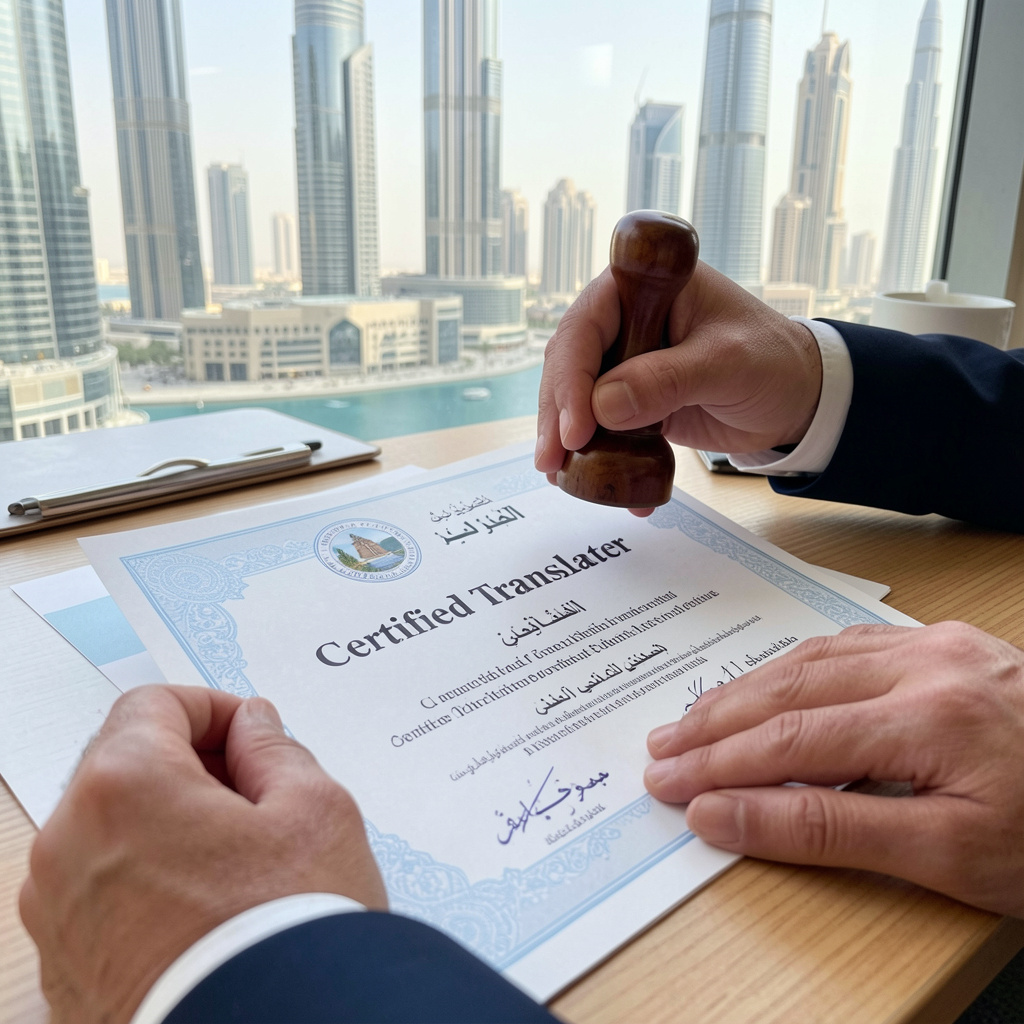
A certified translation is not simply a translation done by someone who speaks two languages well. It carries an official stamp, a signed statement of accuracy, and — in the UAE — the translator’s government-issued license number.
6 Clear Ways to Know If a Translator Is Certified
Look for an Official Government License Number
In the UAE, every certified legal translator must hold a license issued by the Ministry of Justice. Ask for this license number directly. A legitimate certified translator will provide it without hesitation. You can cross-check this number with the MOJ’s official records. If a translator refuses or cannot produce a license number, walk away.
Check for an Official Stamp and Signed Certificate of Accuracy
Every certified translation must include a signed statement — usually on the translated document itself — declaring that the translation is accurate and complete. It must also carry the official seal or stamp of the certified translator or agency. If a document comes back without these elements, it will almost certainly be rejected by UAE courts, embassies, and government departments.
When you need document translation services for submission to official bodies, always confirm this stamp is present before accepting the final output.
Verify MOJ and MOFA Approval
For documents submitted in Dubai and across the UAE, the translator or agency must be approved by the Ministry of Justice (MOJ) for legal translation and by the Ministry of Foreign Affairs (MOFA) when the document is intended for international use. Ask the provider directly: “Are you MOJ and MOFA approved?” Then ask for proof — a certificate, a registration number, or a reference to their official listing.
Confirm Specialization in the Document Type You Need
Certification is also subject-matter specific. A translator certified for legal documents may not be qualified to handle medical or financial translations. For example, if you need immigration document translation services, the translator should have demonstrable experience with immigration-specific terminology and the formatting requirements of immigration authorities. Always ask about their area of specialization.
Ask About Sworn or Notarized Translation Capabilities
In many UAE legal contexts, a certified translation must also be a sworn translation — one where the translator has taken an oath before a notary or court that their translation is faithful to the source document. If your document requires this level of verification, confirm upfront that the provider offers sworn certified translation services. Not every certified translator is also sworn.
Research the Agency’s Track Record and Physical Presence
A certified translation agency in Dubai will have a verified physical office address, a consistent operating history, and client references. Understanding how a translation agency in Dubai ensures accuracy can help you ask the right questions before committing. Be cautious of online-only services with no local presence, no license documentation, and no verifiable record of acceptance by UAE authorities.
Why Certification Verification Matters Most in the UAE
Dubai’s legal and administrative system demands precision. A rejected translation means delays, re-submission fees, and in some visa or legal cases, serious consequences. Whether you are submitting a marriage certificate, a degree, a passport copy, or a legal contract, the authority receiving it will check for the certified translator’s license and stamp.
This is why working with a recognized, government-approved provider is not just a recommendation — it is a requirement. Our full range of translation services covers legal, personal, academic, and business documents, all produced by MOJ and MOFA-approved translators who carry proper certification
Red Flags That a Translator Is NOT Certified
Watch out for these warning signs:
A translator who cannot provide a license number or MOJ registration, who charges unusually low rates without any formal stamp or certificate, who provides a translation on a plain document with no seal, or who cannot name the authority that issued their certification is almost certainly not properly certified. In the UAE, cutting corners on certification carries real risk.
If you’re unsure whether your translator’s credentials will hold up, the same verification steps apply whether you’re submitting to Dubai courts or seeking legal translation services in Sharjah
Need a certified translation accepted by UAE authorities? Right Way Translation has been MOJ and MOFA approved since 2004. Request a free quote today and get your documents handled by verified certified translators in Dubai.
FAQs
1: How do I verify a translator’s certification in the UAE?
Ask for their MOJ license number and verify it with official records. Certified agencies also show approval on stamps and documents.
2: Is a certified translator the same as a sworn translator?
No. Certified translators are licensed, while sworn translators are additionally oath-bound. Some cases in the UAE require sworn translation.
3: What documents require a certified translator in Dubai?
Legal documents like birth certificates, marriage papers, court documents, immigration files, degrees, and contracts require certified translation.
4: Can I use any bilingual person for official documents in the UAE?
No. Only MOJ-licensed translators or approved agencies are accepted. Others will be rejected.
5: What happens if I use a non-certified translator?
Your document will be rejected and you’ll need to resubmit a certified version, causing delays and extra costs.
6: Does Right Way Translation provide certified translations in Dubai?
Yes. It is MOJ & MOFA approved and offers certified translations in 100+ languages across the UAE since 2004.